ADA Handicap Accessible Portable Restroom Rental: Necessary Conformity Points
Portable restrooms are easy to deal with as a last-minute line thing. Somebody orders enough systems, chooses a shipment place, and moves on to car park, food, secure fencing, or the following subcontractor. That is normally where trouble starts. Access does not rest off to the side as a politeness feature. It is part of whether the restroom arrangement is usable whatsoever for lots of people going to an occasion, visiting a site, or relocating with a short-term space.
I have seen this play out in extremely regular methods. A planner books an ada portable toilet yet puts it on soft ground after a rainfall. A service provider orders the right count of systems yet leaves the obtainable one boxed in behind barricades. A festival manager assumes that due to the fact that the bigger device got here, the work is done. Theoretically, each of those teams may really feel near to compliance. In technique, they have misunderstood that ease of access depends on the route, the entrance, the clearances, the recognition, and the standard capacity to reach and make use of the device with dignity.
If you are arranging an ada portable bathroom rental, one of the most vital point is to assume past the label on the door. A certified service is not just a bigger box. It is a short-lived center that still needs to meet real access requirements.
The federal standard that matters
For mobile bathroom leasings in the United States, the controlling government availability criterion is the 2010 ADA Standards for Accessible Layout, as translated by the Gain access to Board and the Department of Justice. That issues because people frequently depend on habit, supplier shorthand, or obsolete presumptions. Words "wheelchair easily accessible" in a sales conversation are not the same as real ADA compliance.
The lawful framework is not abstract. It tells you that temporary arrangements still have ease of access obligations. If you are taking care of portable single-user devices grouped with each other in a cluster, the scoping guideline is particularly vital. At least 5 percent of the units in each cluster have to come, which principle applies also at momentary events.
That solitary point cleans up a lot of complication. Occasion coordinators occasionally presume ease of access requirements loosen up because the installation is just there for a weekend break. They do not. Temporary does not imply optional.
The 5 percent regulation is basic, yet people still misapply it
The scoping requirement appears uncomplicated, yet this is where numerous rental orders drift off training course. If you develop a cluster of mobile single-user commode units, a minimum of 5 percent of that cluster must come. The essential phrase is "in each collection." That implies ease of access is not dealt with by putting one obtainable system somewhere else on the building and treating it as coverage for every toilet bank.
This issues on big websites. If an outdoor performance has restroom areas near the entryway, near the food court, and near a VIP section, the accessible-unit count needs to be thought about at the cluster level, not simply in a complete sitewide matter. The useful reason is evident. A person ought to not need to travel throughout the grounds because the only ada compliant portable bathroom was placed in a different zone.
When the mathematics creates a fraction, coordinators should not get cute concerning rounding down in spirit. The safer, extra respectful approach is to make certain the collection actually consists of the required easily accessible visibility. Availability is one of those areas where treating the minimum as a puzzle to address usually causes negative positioning and miserable users.
An accessible mobile restroom has to be identified
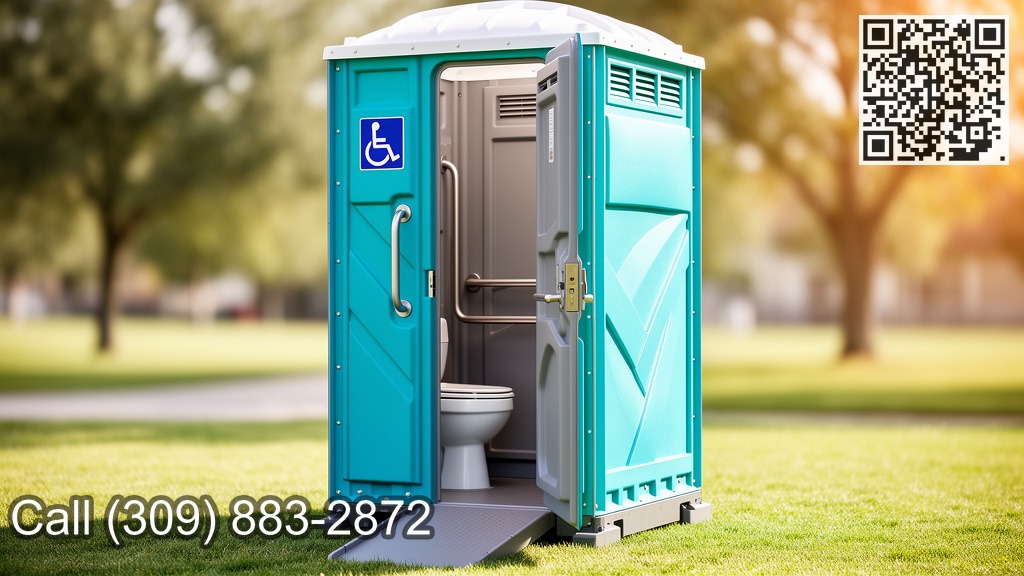
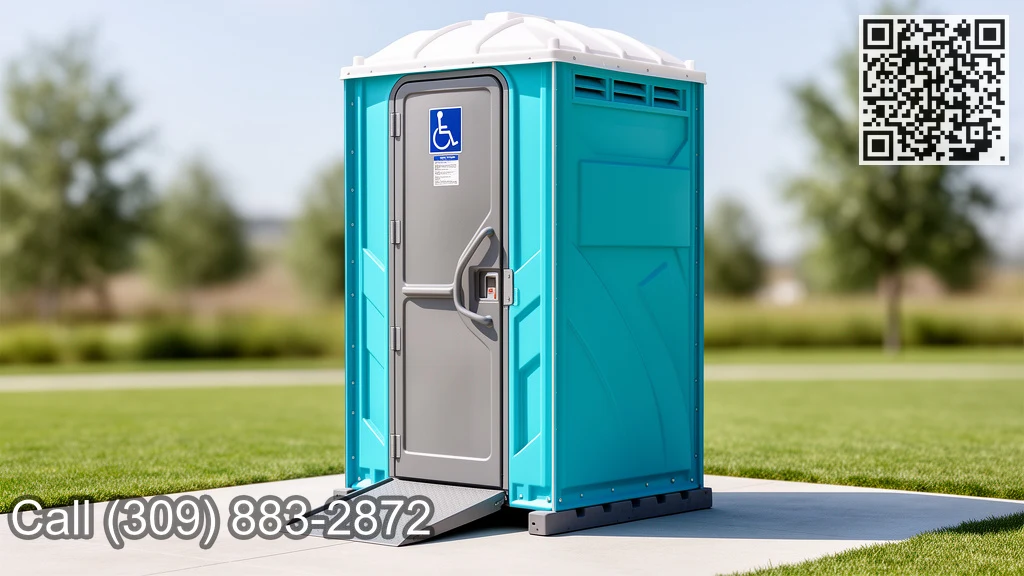
Another factor that obtains ignored is signage. Available mobile toilet systems should be identified with the International Icon of Ease Of Access. This is not decorative. It helps people find the correct center without needing to evaluate every door straight or ask for help.
That may sound minor up until you visualize a crowded fairground at dusk or a jobsite with dust, devices, and visual clutter. A correctly marked ada handicap easily accessible mobile bathroom decreases unpredictability and quicken access. It also signals to personnel and safety and security teams that the unit offers a specific purpose and ought to not be blocked with materials, trash, fencing, or parked carts.
I have seen obtainable systems become unofficial storage space since they are larger. That is not a harmless ease. A noticeably determined device is still only useful if the arrangement around it appreciates what that icon means.
The path to the toilet belongs to compliance
This is where lots of or else well-intentioned setups fall short. Portable obtainable devices need to have an accessible course and entry. If ramps or touchdowns are needed, those attributes likewise need to abide by the ADA technological requirements.
That suggests conformity does not begin at the limit. It begins where a person begins coming close to the device. If the path is obstructed, unpredictable, muddy, high, or disrupted by short-term obstacles, the accessible washroom may be functionally not available also if the unit itself is practically the right model.
This is just one of the most essential judgment calls in the area. A washroom vendor might provide an ada available mobile bathroom that is suitable in itself, yet the site host still controls placement. If the host chooses a place across deep crushed rock, behind a lip in the sidewalk, or past a narrow chicane of crowd-control secure fencing, the real-world outcome can be noncompliant and unusable.
The path issue comes to be a lot more vital on temporary event grounds because surface areas change fast. A completely dry verdant path on Friday can become rutted and soft by Saturday mid-day. Shipments, generators, and foot traffic can alter accessibility after installment. The lesson is basic: accessibility should be examined again after the devices are established and again as the website starts operating.
Inside the unit, technical demands still apply
The Access Board assistance explains that portable units have to meet toilet-room technological demands, consisting of component clearances, transforming room, and door maneuvering clearances, plus applicable grab-bar and water-closet clearance rules.
That sentence brings a lot of weight. It tells you that an ada certified accessible portable washroom is not compliant just since it is bigger than a common device. Interior use issues. People need adequate room to go into, maneuver, placement themselves, and utilize the components with the support includes the standards require.
It deserves stopping briefly right here since this is where advertising and marketing language commonly gets slippery. Suppliers may market an ada portable toilet, an ada-compliant portable bathroom, or ada compliant mobile restrooms in wide terms. Those expressions serve just if the actual system supplied aligns with the technical requirements. A bigger covering without the right clearances or interior features is not a real substitute.
I prevent pretending that every coordinator needs to remember technical measurements. The majority of do not. However they do require to understand what to confirm with the supplier and what to inspect on arrival. The broad conformity categories are not optional details. Transforming area, clearances, and steering area are the difference in between access in theory and gain access to in practice.
Why placement blunders take place so often
A lot of placement errors originate from functional stress, not bad intent. Groups are attempting to balance truck accessibility, pump-out accessibility, aesthetic appeals, group circulation, and readily available space. The available device, due to the fact that it is typically bigger, gets pressed to the margins. It might be positioned where the delivery van can unload it fastest, where there is leftover room behind a tent, or where it "will not be in the method."
That instinct typically produces a bad outcome. The very best location for an ada compliant mobile commode is not the last open port. It is an area individuals can really get to and use without unique help. Sometimes that means giving up a cleaner sightline or changing a barrier run. Sometimes it implies thinking of drain before the unit arrives. Those are clever compromises. Availability usually obtains much easier when it becomes part of the preliminary website plan as opposed to an improvement after setup.
Another typical issue is separating the easily accessible unit too much from the various other restrooms. Individuals do this with excellent objectives, thinking extra area around it will certainly aid. Sometimes it does. In some cases it leaves the user isolated in a less noticeable, less hassle-free, or less safe-feeling area. Availability needs to sustain equivalent usage, not produce a side course unless site restraints truly require it.
The construction-site exception requires mindful handling
There is an essential subtlety in the requirements background that individuals often overextend. The ADA Requirements distinguish portable commode devices at building and construction websites utilized specifically by construction workers, which are excluded from the portable-toilet access scoping demand in the pointed out 1991 criterion. That does not create a covering exemption for every single mobile commode at every construction-related area, and it does not eliminate the accessible-unit requirement for general mobile bathroom rentals.
This distinction matters because it is very easy for task teams to listen to "construction website" and quit the evaluation there. The real context issues. If you are setting up portable toilets for the public, visitors, or event attendees, the accessible-unit demand remains relevant. The exemption language must not be utilized as a faster way to stay clear of preparation available solution where the public is involved.
That is just one of those side cases where a quick conversation can save a lot of difficulty. Ask who will make use of the units, whether the setup is specifically for building workers, and whether the rental is part of a general-access environment. Those concerns are far better than relying on presumptions connected to the job type.
What renters ought to confirm prior to delivery
If you are placing an order for ada compliant mobile bathrooms, a short confirmation step can prevent expensive reshuffling later. The goal is not to come to be a code expert over night. The goal is to ask sufficient of the ideal inquiries that the delivered arrangement has a sporting chance of meeting the requirements.
- Confirm the amount of units will remain in each collection and see to it a minimum of 5 percent of each collection will be accessible.
- Confirm that the easily accessible devices will certainly be understood the International Sign of Accessibility.
- Confirm where the available course will begin and whether ramps or landings will be needed.
- Confirm that the unit given is intended to fulfill the appropriate ADA technological requirements for bathroom rooms.
- Confirm the final placement after distribution, not simply the order type before delivery.
That five-point check catches most of the failures I see most often. None of it is extravagant, however it is functional and respectful.
Temporary occasions deserve the very same seriousness as long-term spaces
There is a consistent myth that pop-up occasions obtain a pass due to the fact that they are temporary, congested, and logistically unpleasant. The criteria do not sustain that perspective. The Accessibility Board guidance especially applies the 5 percent accessible-unit policy to temporary occasions. That ought to resolve the issue for fairs, races, celebrations, seasonal attractions, and public events of every kind.
The deeper reason is human, not just legal. Momentary occasions are where individuals are commonly strolling long distances, standing in lines, browsing strange surface, and counting greatly on clear wayfinding. Bathroom access matters more in that environment, not less.
A good occasion strategy treats the ada mobile washroom as component of visitor experience and threat monitoring at the same time. If the available unit is also away, difficult to recognize, or difficult to technique in a wheelchair or various other wheelchair tool, the failing is prompt and noticeable. Individuals remember it. Personnel invest the remainder of the day improvising around a problem that should have been resolved before gateways opened.
Compliance is more comprehensive than one washroom unit
There is also a bigger context worth taking note of. Ease of access enforcement is not stalling. In April 2026, the Department of Justice issued support extending the target date for state and local government web and mobile access policies to April 26, 2027 for bigger entities. That advice has to do with electronic availability, not mobile commodes. Still, it reflects something crucial: ADA conformity is active across sectors, and companies are being asked to pay closer interest to gain access to in numerous forms.
For anyone handling physical site procedures, this more comprehensive environment should be a signal. Ease of access is progressively viewed as a full functional responsibility, not a box to tick in one division. A group that bewares regarding on-line access however casual regarding an ada-compliant portable bathroom on the ground is not really thinking holistically. The exact same holds true in reverse.
Common judgment calls that should have extra care
Not every issue includes a bright red flag. https://pastelink.net/wwsmc0qf Some of the hardest problems being in grey locations of planning and execution. That is why experience matters.
A collection may practically consist of the best variety of ada certified portable commodes, yet still leave one side of a large venue underserved. A path might appear easily accessible during setup, then break down after weather or hefty use. A supplier might properly provide an ada accessible mobile washroom, while the host undermines conformity by fencing it off as well tightly. None of those circumstances is solved by indicating the purchase order.
The ideal operators revisit the configuration through the eyes of the person that in fact requires it. Can they discover the system without assistance? Can they reach it on the available surface? Can they open up and utilize it with the room offered? Is the system working as meant, or has bordering website activity jeopardized accessibility? Those questions sound standard, however they are commonly what separate a professional arrangement from a performative one.
When "ADA obtainable" language gets fuzzy
The rental market makes use of a number of expressions mutually: ada portable toilet, ada portable restroom, ada compliant portable bathroom, ada-compliant mobile toilets, and similar variations. From a writing and sales standpoint, that is understandable. From a conformity point ofview, it can blur crucial distinctions.
What issues is not the expression itself but whether the delivered device and its placement straighten with the governing standards. A salesperson may suggest "this is our bigger system." A website manager might hear "this device pleases whatever." Those are not the exact same statement. If there is one behavior worth developing, it is to ask exactly what is being offered and how the site conditions will sustain access.
That is especially true when numerous events are entailed. The rental company controls inventory. The event organizer regulates format. The homeowner might control the grounds. A general service provider may manage staging. Ease of access typically falls through the voids between them. Clear jobs help. A person requires to have the count, the path, the recognition, and the final functional problem of the setup.
A practical standard for obtaining it right
The cleanest way to think about an ada handicap accessible mobile bathroom is this: a person must be able to locate it, reach it, enter it, maneuver inside it, and use it without dealing with barriers produced by the short-term nature of the site.
That standard is much more functional than judicial, yet it tracks the conformity points that matter. The system needs to be part of the ideal count in each collection. It needs to be determined. It has to sit on an easily accessible path and have an obtainable entryway. If ramps or landings are needed, those components have to comply too. Inside, the technological demands for commode rooms still apply, consisting of the essential clearances and maneuvering space.
If you keep those basics in sight, the rest of the decision-making obtains clearer. You stop dealing with the accessible system as a specialty add-on and start treating it as a core functional requirement. That shift generally boosts the entire bathroom strategy, because as soon as teams believe carefully about course, positioning, and use, every individual benefits.
The arrangements people bear in mind for the right reasons
The ideal mobile bathroom strategies are almost unseen. Visitors and employees do not quit to appreciate them. They merely function. People find the bathrooms conveniently, transfer to them without problem, and utilize them without needing to request for supports. That is what success resembles in this edge of website planning.
An ada mobile commode leasing done well mirrors treatment before anybody gets here. It shows up in the count, the map, the ground problems, the signage, and the last walkthrough. It likewise lionizes. Not performative regard, not conformity language on a contract, yet the functional kind that lets a person make use of the very same event or facility with less rubbing and even more independence.
That is the real standard worth going for, whether you are buying one ada certified mobile toilet for a small event or working with several clusters of ada certified obtainable portable bathrooms across a huge short-term website. Conformity starts with the rulebook, yet it prospers in the information individuals really encounter.
 Ask ChatGPT
 Ask Grok
 Ask Perplexity
 Ask Claude
 Ask Google AI
 Ask You