ADA Compliant Accessible Mobile Toilets: What Rental Consumers Must Know
If you are renting mobile bathrooms for an event, public gathering, area program, or temporary website available to guests past a personal crew, accessibility is not a side detail. It is part of whether individuals can participate with self-respect, self-reliance, and fundamental comfort. That sounds apparent when mentioned simply, yet mobile cleanliness is among those locations where individuals typically focus first on device counts, distribution windows, and pump-out routines, then recognize later that they have not thought very carefully sufficient concerning access.
I have seen this occur in planning conversations greater than when. A client will certainly request for "one handicap unit" as if that expression alone settles the issue. It does not. An ada available portable toilet is not just a larger box went down somewhere near the conventional devices. The placement issues. The route matters. The entrance issues. The interior format issues. Also the method the system is significant matters.
That is why rental clients should understand the fundamentals before the truck arrives.
The primary regulation customers need to know
For collections of portable single-user toilet devices, at least 5 percent of the units in each cluster should be accessible. That typical applies also at momentary occasions. For many consumers, that is the solitary essential beginning point, because it changes just how you count devices and exactly how you plan the washroom area.
This factor gets missed out on surprisingly typically. Someone may presume that since an occasion is brief, outdoor, or temporary, the availability need is in some way unwinded. It is not, based upon the controling government accessibility requirements and how they are interpreted for momentary mobile toilet arrangements. If you have a cluster of portable single-user units, you need obtainable systems in that collection at the needed ratio.
That means the conversation must start with the cluster count, not with an obscure request for "an ADA system if we have area." If you are renting out ten portable restrooms together in one bank, your planning should already account for the needed easily accessible presence within that cluster. If you are producing different bathroom groups in various areas of a website, each collection needs to be taken into consideration on its own.
That tail end issues more than clients anticipate. I have seen formats where coordinators put basic devices near the main task location and placed the available portable commode somewhere else since there was "even more space over there." From a sensible point ofview, that often creates aggravation for individuals. From a compliance point ofview, it also misses out on the logic of the rule, which checks out each cluster.
"ADA compliant" indicates more than added floor space
A lot of rental buyers utilize terms like ada mobile washroom, ada portable bathroom, ada compliant mobile commode, and ada-compliant mobile bathroom mutually. In everyday conversation, that is understandable. In method, however, what you are seeking is a system and setup that fulfill the appropriate availability needs, not merely a roomier model.
The government requirements compare a system that is advertised delicately as available and one that actually pleases the relevant design and format requirements. Mobile accessible units have to satisfy toilet-room technical demands, consisting of clearances for handling, transforming room, and door handling, together with relevant rules for grab bars and water-closet clearances. The entry and course additionally have to be accessible, and if ramps or touchdowns are required, those need to follow ADA technical requirements too.
That is why knowledgeable coordinators ask much better concerns than "Is it the huge one?" Size alone does not address whether the system works for real users or whether the installation is compliant once it is on site. A large unit positioned in mud at the end of a rutted course is not functioning as an accessible service. Neither is a correctly built unit whose entryway is obstructed by grade changes, soft ground, or inadequate positioning.
This is among one of the most important mindset changes for clients. Accessibility is about functionality in the real conditions individuals come across on the day of the occasion or rental period.
The path to the washroom is part of the restroom
This is where lots of otherwise mindful strategies begin to break down.
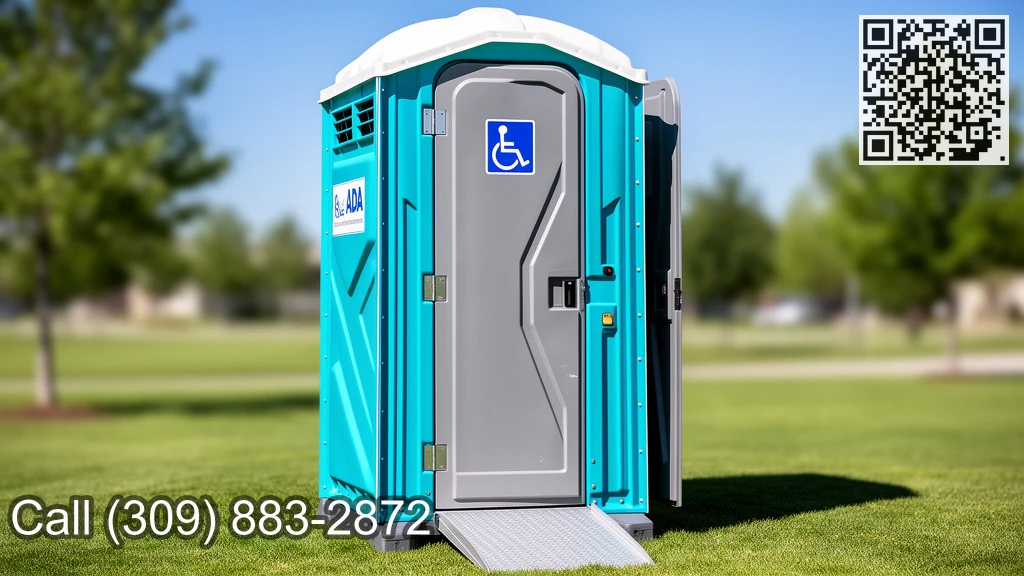
Customers will certainly hang out discussing the variety of units and almost none talking about how someone reaches them. Yet the accessible path becomes part of the requirement. If an ada compliant available portable toilet is delivered to a sloped patch of turf, set behind a curb, or put where a person needs to cross loosened gravel or deep mud, the issue is not just inconvenient. The setup might stop working the access demand since accessibility is not practically the interior compartment.
Think regarding the toilet trip from an individual's viewpoint. They come to the site, approach the marked toilet location, approach the entryway, unlock, maneuver within, make use of the fixture, and exit safely. Every component of that series issues. If any type of action ends up being difficult or impossible because of the route, the setup is refraining from doing what it is supposed to do.
This is particularly pertinent at celebrations, fairs, races, pop-up places, and short-lived community occasions where the grounds may be irregular or modification with climate. A site that looked workable during a sunny walkthrough can become much tougher after rain. I have seen event fields turn from "firm sufficient" to deeply rutted by supplier web traffic in a single mid-day. When that happens, the easily accessible route becomes the first thing to fail.
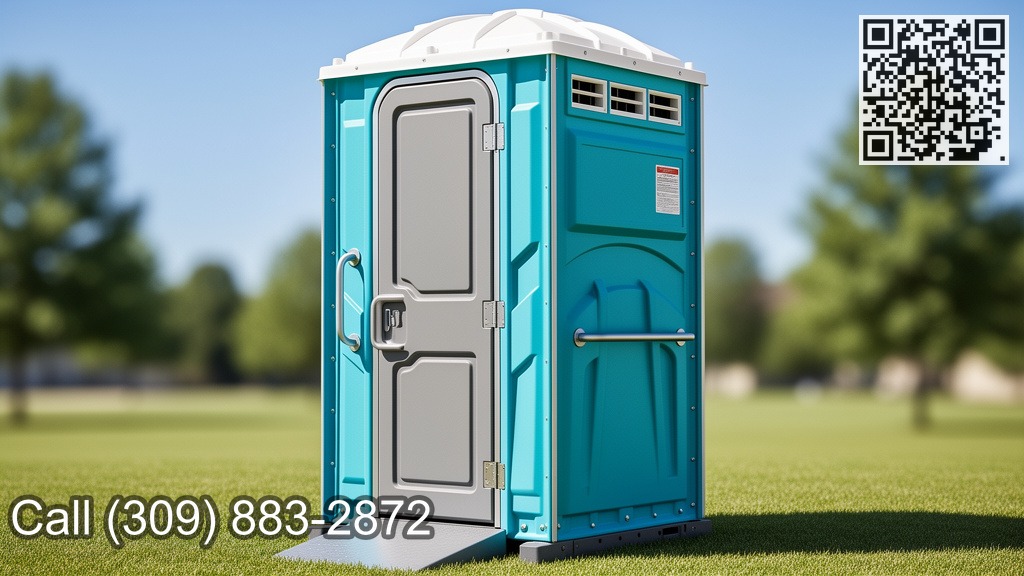
Customers do not require to come to be code specialists to intend well. They do need to recognize that an ada mobile bathroom leasing includes more than picking an unit from a brochure. Site problems belong to the decision.
Identification is not optional
Accessible portable bathroom devices must be understood the International Symbol of Accessibility. This may seem like a small information compared to course accessibility or indoor handling space, however it has genuine value. Individuals need to be able to find the suitable device promptly and confidently. Clear recognition decreases confusion for users and team alike.
It also avoids an all-too-common issue at hectic occasions, where guests walk past an obtainable system since it does not stick out plainly, after that presume none is offered. Excellent identification sustains actual use, and actual usage is the whole point.
If you are the client, do not assume this will be managed automatically without conversation. Validate how the system will certainly be recognized and make certain the easily accessible device is not concealed behind barriers, storage space, or crowd-control fencing.
One unique exemption consumers in some cases hear about
There is a slim context that triggers complication: mobile bathroom units at construction sites used specifically by building and construction workers have been treated differently under the older mentioned 1991 requirement. Some people hear that and incorrectly wrap up that mobile bathroom availability guidelines are usually looser on task websites or short-lived locations.
That is not a safe basic assumption.
For general mobile commode services, the accessible-unit demand continues to be appropriate. If your arrangement offers the general public, event guests, consumers, or others beyond that details excused construction-personnel context, you must not rely upon that exception. It is just one of those details that gets duplicated delicately and misinterpreted swiftly. Rental consumers are better off dealing with availability as an expected preparation need unless they have a very specific reason, grounded in the real policy context, to think otherwise.
Why "momentary" does not mean "lesser"
There is a habit in event preparation and temporary-site logistics of treating temporary installments as somehow informal. If it is only there for a day or a weekend, people assume perfection is unrealistic. Realistically, not every occasion website is very easy. Fields are uneven. Shipment paths are limited. Utility disputes appear late. Routines slip. But none of that alters the relevance of giving access.
For the person who needs the ada handicap easily accessible mobile washroom, the service is not a formality. It is whether they can stay at the occasion without leaving early. Whether they can go to a graduation, sustain a member of the family at an event, function a cubicle via a lengthy change, or merely stay clear of the embarrassment of having no functional option.
That is why compassion belongs in this conversation alongside conformity. The standards matter due to the fact that they secure genuine participation.
Questions worth asking prior to you sign the rental order
A short, sensible discussion up front can avoid the most common troubles. You do not need a lawful memorandum. You need clearness on the device, the collection, and the website conditions.
- How many mobile single-user units will be in each cluster, and the number of of those will be accessible?
- Where specifically will the easily accessible unit be placed about the toilets individuals are anticipated to use?
- What is the course to the system like on the actual ground, not simply on the site map?
- Will the easily accessible device be plainly related to the International Icon of Accessibility?
- If ramps or landings are needed, that is responsible for guaranteeing they comply with the relevant technical requirements?
Those five inquiries are straightforward, but they require the appropriate discussion. They likewise expose quickly whether a supplier or website coordinator is believing in functional terms or just checking a box.
Placement blunders that trigger migraines later
The most constant problem I see is not a lack of excellent intents. It is last-minute choice making.
A coordinator might schedule ada certified portable commodes early, after that allowed an additional website change push the systems into a worse location. Sometimes a food vehicle line increases. Often a momentary fencing shifts. Often the washroom bank ends up beside a slope because the flatter area obtained asserted by staging equipment. None of those adjustments really feel major when they occur one by one. With each other, they can undermine accessibility.
Another blunder is isolating the obtainable system to "provide it more space." On paper that appears thoughtful. In practice it can indicate the available device is much from the main toilet location, inadequately lit, more difficult to locate, or reachable just via a different path that is less stable.
There is also the weather issue. Dry grass is not the like rain-soaked lawn. An occasion supervisor might stand on a field in setup footwear two days before opening and assume, this is fine. Then delivery cars, vendor web traffic, and a little water alter the entire surface. If your event depends upon outside positioning, it is worth analyzing what takes place if problems worsen.
Good planning usually looks less significant than negative planning. It is choosing the flatter course. Keeping the strategy clear. Protecting the course from infringement. Validating the positioning after other vendors are assigned. None of that is glamorous, but it is what makes an ada compliant mobile toilet usable.
Accessibility and consumer depend on go together
People notification when lodgings are thoughtful, and they notice when they are token gestures.
If your guests or participants consist of older grownups, disabled participants, caregivers, experts, or anybody making use of mobility tools, they are currently scanning a website in a different way than others are. They are noticing distance, quality, crowd thickness, and whether the available toilet appears to have actually been prepared intentionally or tacked on at the end.
That influences count on. When the toilet configuration really feels obtainable in a real way, individuals have a tendency to presume the remainder of the event has actually been planned with the exact same treatment. When the accessible device is stuck in an undoubtedly unpleasant area, the message is hard to miss.
This is one reason experienced organizers significantly deal with ease of access as part of the total guest experience as opposed to a narrow conformity job. The lawful structure issues, yet so does the human signal it sends.
The more comprehensive conformity environment is getting extra serious
Across lots of sectors, ADA conformity is being implemented within a https://edwinkntq024.lucialpiazzale.com/ada-compliant-portable-bathroom-rental-why-accessible-routes-matter wider atmosphere of access expectations. That does not imply every bathroom rental consumer requires to come to be a specialist in every access policy across the economic situation. It does suggest availability is not fading right into the background. If anything, organizations are seeing that ease of access obligations are active, visible, and significantly scrutinized.
That larger context should urge rental clients to stay clear of shortcuts. When a company, district, college, church, or event coordinator makes sure with something as basic as portable cleanliness accessibility, it is normally a sign of much healthier compliance habits overall.
What to anticipate from an excellent service conversation
A capable portable bathroom service provider should have the ability to discuss available options in plain language. They must understand that customers may request ada-compliant portable bathrooms, ada compliant mobile bathrooms, or an ada mobile bathroom leasing, which all of those terms point toward the exact same useful need: a device and setup that satisfy applicable accessibility requirements.
The toughest providers usually do 3 things well. They do not decrease the website problems. They do not treat recognition as unimportant. And they understand that placement within the restroom cluster matters.
Customers likewise have duties. If you transform the website plan after distribution, block the course with barriers or materials, or move individuals through surface that jeopardizes gain access to, the trouble is not addressed just because an available unit was initially delivered. Access can be broken by poor event procedures even when the appropriate device was ordered.
That deserves saying plainly due to the fact that rental customers occasionally assume compliance is completely the supplier's problem. It is not that easy when the customer regulates the site format, website traffic circulation, and last usage conditions.
When one unit is not enough
The 5 percent guideline is the standard for clusters of portable single-user toilets, however consumers should not believe only in terms of minimums divorced from fact. A minimum need is exactly that, a minimum. Relying on the dimension and nature of the event, need patterns may make a bare-minimum technique feel strained also if the count practically covers the base scoping requirement.
I would certainly be careful below, however, because good judgment depends upon context. Group size, event duration, demographics, and website spread out all matter, and not every situation justifies exceeding the minimum matter in the same way. Still, if you expect heavy presence or multiple bathroom clusters across a wide site, it is a good idea to think through actual individual flow, not just the threshold inquiry of whether an easily accessible device exists somewhere.
This is where functional preparation matters as high as official scoping. An accessible device that is regularly inhabited due to the fact that the overall arrangement was also lean can create avoidable disappointment. Customers who have actually organized repeated annual events normally discover this quickly.
A final preparation lens that helps
When choosing whether your configuration is most likely on the best track, it aids to imagine one visitor showing up alone and utilizing the washroom without assistance. Could they find the available unit conveniently? Could they reach it using the planned path? Could they enter, maneuver, and departure without unnecessary obstacles? Would certainly the configuration still function if the ground conditions ended up being slightly even worse than expected?
If the answer to any one of those concerns feels shaky, the strategy most likely requires another look.
An ada compliant accessible portable washroom need to not be treated as a special favor for a little team. It is a basic component of making a short-term website benefit the public. The clients that manage it best are hardly ever the ones with the largest spending plans. They are the ones who ask much better inquiries early, validate the details, and consider the experience from the individual's factor of view.
That method offers compliance, definitely. Much more notably, it offers people.
 Ask ChatGPT
 Ask Grok
 Ask Perplexity
 Ask Claude
 Ask Google AI
 Ask You